5 Things Crypto Investors Need To Know About The Market Crash
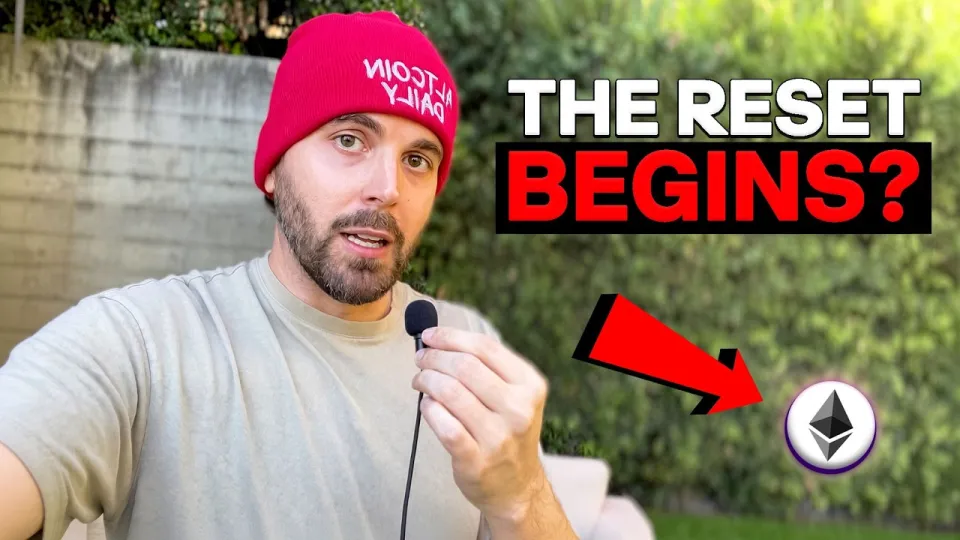
Video: Crypto Investors Are In Serious Trouble (market crash)
You can order the same kind of articles for your own video to boost it on YouTube and Google. Just message the Telegram bot @sat_sit_bot. Articles with your video embedded are written and posted by the bot itself — on popular topical sites (no ads). Try it free: 50 articles on us.
· based on the channel Altcoin Daily
A crypto market crash like the one in this cycle is best handled by checking the numbers before the narrative: Bitcoin was quoted at $80,707 as of October 24, 2026, which works out to a five-year compound annual growth rate of just 5.78%. That single figure explains why so many investors feel trapped — the asset class still works over long horizons, but the last five years delivered returns closer to a savings account than to the legend of 10x gains. If you want to follow the coverage and pick up channel merchandise, you can visit the Altcoin Daily shop, while the core lessons below apply to any portfolio.
What the crypto market crash actually looks like in numbers
The crash is less a single event than a slow grind of lower prices and exhausted patience. Bitcoin sitting at $80,707 with a five-year CAGR of 5.78% means an investor who bought five years earlier has barely beaten inflation after accounting for volatility. That is the uncomfortable arithmetic behind the panic: the asset did not go to zero, but it failed to deliver the returns that justified the risk.
Three facts frame the picture:
- Price level: Bitcoin at $80,707 as of October 24, 2026.
- Long-horizon return: a five-year CAGR of 5.78%.
- Market behavior: participants describe the move as manipulation and normal volatility rather than a structural collapse.
When the return profile compresses this much, the psychology shifts. Investors who planned to retire on the next cycle start recalculating, and those who entered near the top face the hardest decision — realize a loss or wait for a recovery that may take years.
Why long-term holders are not selling into the drawdown
The most common response among experienced holders is to stop watching the charts. One widely shared sentiment is that checking prices daily adds nothing when the investment horizon is measured in years, and that cash is better conserved for other priorities — improving living conditions, for example — than deployed into a falling market out of boredom.
The logic is straightforward: if your thesis has not changed, the price drop is information about sentiment, not about the asset. That said, this approach only works under specific conditions:
- The position size does not threaten near-term financial obligations.
- The holding period genuinely extends beyond one cycle.
- There is a plan for adding on weakness rather than a vague hope of recovery.
Investors who satisfy all three treat a crash as a scheduling problem, not an emergency.
The Bitcoin versus Ethereum cycle divergence
A recurring question in the current market is why Bitcoin keeps printing higher highs across cycles while Ethereum does not. Bitcoin has historically made a higher high each cycle, yet ETH has failed to revisit its previous peak — a divergence that undermines the simple assumption that the two largest assets move in tandem.
This matters for portfolio construction. If you hold Ethereum on the theory that it will eventually replicate Bitcoin's cycle structure, the absence of a new all-time high is a direct challenge to that thesis. The honest framing is that BTC and ETH now behave like different assets with different demand drivers, and allocating to them as if they were interchangeable exposes you to a risk you did not intend to take.
How to position for a crash: averaging down and buying time
For accumulators, a crash is simply a longer discount window. The practical playbook that shows up repeatedly among holders is to keep buying in tranches and lower the average entry price, rather than attempting to time a bottom.
A workable structure looks like this:
- Define a fixed amount you can commit each month regardless of price.
- Split it into smaller buys so a single bad entry does not define your cost basis.
- Keep a cash reserve for the deepest part of the drawdown, when fear peaks.
- Set a rule for when you stop buying — for example, when the position exceeds a target share of net worth.
Averaging down only improves outcomes if the asset recovers. It is a method for managing entry price, not a substitute for a thesis.
Typical investor questions during a market crash
Uncertainty during a drawdown produces the same handful of questions, and they deserve direct answers. One is whether the current cycle is the last one worth participating in — a question about the longevity of the asset class rather than about price. Another is what a well-known analyst such as Tom Lee thinks about specific assets, including Solana, and whether large Ethereum holders might start selling.
Other recurring themes are more practical: what coins belong in a long-term altcoin portfolio, and whether regulation will actually become more permissive. On regulation, the skepticism is warranted — promises of fewer rules are cheap, and investors should price in the possibility that policy stays restrictive. On Solana, price predictions such as $1,000 by 2028 circulate widely, but they are forecasts, not commitments, and should be sized accordingly in any plan.
The merchandise link and where to follow the coverage
The channel behind this market breakdown, Altcoin Daily, sells branded gear through its official store. The only link referenced in the coverage is the merchandise shop:
- Altcoin Daily merch: https://altcoindailyshop.myshopify.com
Merchandise is not investment advice, and buying a hat does not improve your cost basis. Treat it as support for the channel if you find the market commentary useful.
Summary
The current crypto market crash is defined less by a dramatic single-day collapse than by a grinding compression of returns: Bitcoin at $80,707 with a five-year CAGR of 5.78% is a sobering number for anyone who expected cycle-level multiples. Long-term holders are responding by not watching prices daily, preserving cash, and averaging down in tranches, while the Bitcoin–Ethereum divergence forces a rethink of how the two assets are allocated. Regulatory optimism should be treated with skepticism, and price targets like $1,000 Solana by 2028 are forecasts rather than facts. For the full breakdown of these conditions, see the analysis from the Altcoin Daily channel, and if you want to support the coverage, the Altcoin Daily merch store is the place to go.
Key takeaways
- Bitcoin traded at $80,707 as of October 24, 2026, giving a five-year CAGR of just 5.78%.
- The drawdown is being framed less as a crash and more as normal market manipulation and a buying window.
- Bitcoin has printed higher highs each cycle, while ETH has failed to match that pattern.
- Long-term holders are sitting out the noise, saving cash, and averaging down instead of panic selling.
- Altcoin Daily merchandise is available at altcoindailyshop.myshopify.com.
Questions & answers
Is the crypto market actually crashing or is it just normal volatility?
The numbers point to a prolonged drawdown rather than a sudden collapse. Bitcoin at $80,707 with a five-year CAGR of 5.78% shows returns compressed to near-conventional-asset levels, which feels like a crash to anyone who bought expecting cycle-level multiples. Many participants describe the move as manipulation and ordinary volatility, but the weak long-horizon return is the part that matters for planning.
Should I keep buying altcoins during a crash?
Only if you have a fixed plan and cash you can afford to commit. The common approach is to buy in tranches to lower your average entry price, keep a reserve for the deepest part of the drawdown, and set a cap on how large the position can grow relative to your net worth. Averaging down manages entry price; it does not fix a broken thesis.
Why is Ethereum not making new highs while Bitcoin does?
Bitcoin has historically printed a higher high each cycle, while ETH has failed to revisit its previous peak. That divergence suggests the two assets now respond to different demand drivers, so treating them as interchangeable in a portfolio exposes you to risk you may not have intended. It is a reason to review allocation rather than assume ETH will eventually catch up.
Will regulation become more favorable for crypto?
Promises of fewer laws are cheap and should not be priced in as a certainty. Investors should assume policy could remain restrictive and size positions accordingly, rather than building a thesis on anticipated deregulation. Any regulatory improvement is upside, not a base case.
Source: Crypto Investors Are In Serious Trouble (market crash) · Markdown version