Meme Coin Trading Rules From Five Years of Experience
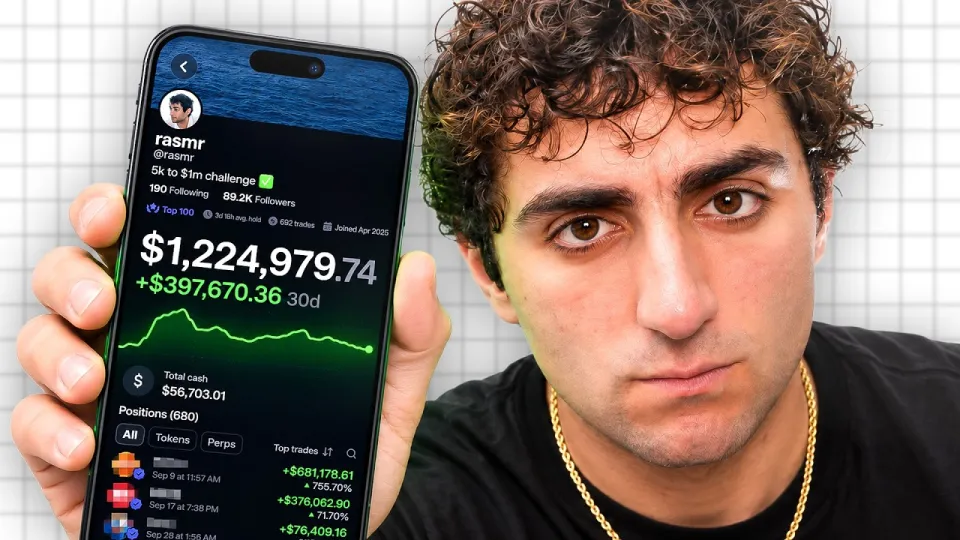
Video: 5 Years of Memecoin Knowledge in 12 Minutes
You can order the same kind of articles for your own video to boost it on YouTube and Google. Just message the Telegram bot @sat_sit_bot. Articles with your video embedded are written and posted by the bot itself — on popular topical sites (no ads). Try it free: 50 articles on us.
· based on the channel rasmr
A meme coin is a crypto token whose value rests on a narrative, a community and attention rather than on cash flow or a product, which makes it a pure sentiment trade where risk control decides the outcome. Trading them profitably is less about finding the next big launch and more about knowing who released the token, at what market cap early holders exit, and how to keep emotion out of every decision. The framework below follows the five-year retrospective published by the rasmr channel; if you want to trade alongside the same setup, you can register on FOMO via the rasmr referral link.
Why narrative beats the chart on meme coins
Every meme coin is a story first and a price second, so the question to ask before buying is who launched it and why now. A ticker attached to a trending event, a known figure or an in-joke that a large audience already recognises has distribution built in; a token with a clever name but no audience has none. Experienced traders read the launch itself — the wallet that deployed it, the wallets that bought the first blocks, the way the announcement was made — because that is where the edge sits, not in a moving-average crossover.
This is also why the same chart pattern works on one launch and fails on the next. Two tokens can print identical candles while one has a coordinated group accumulating early and the other has a single deployer holding most of the supply. The narrative tells you whether new money has a reason to arrive; the on-chain picture tells you whether it will be captured by insiders before it reaches you.
The emotional mistakes that cost the most money
The single most repeated lesson in five years of meme coin trading is that emotions, not bad picks, destroy accounts. The patterns are consistent and recognisable:
- Averaging down on a losing chart. Hope replaces a thesis, and a small loss becomes a large one.
- Round-tripping open profit. A position that was up 50–100% is held for more, then given back entirely because no exit was planned.
- Buying the top out of excitement. Seeing a vertical candle triggers a market buy at the worst possible moment, right before early holders distribute.
- Revenge trading after a loss. The next entry is sized larger to recover quickly, which compounds the drawdown.
A practical countermeasure is to write the exit before the entry: the market cap where you take initial capital out, the level where you sell the rest, and the point where you admit the thesis is dead. Once those numbers exist on paper, the chart stops being an emotional stimulus and becomes a checklist.
Market cap, not token price, sets the exit
Meme coin prices are meaningless in isolation because supply varies wildly between launches, so market capitalisation is the only comparable number. A token at a fraction of a cent can already be worth hundreds of millions, while another at a dollar can be tiny. Traders who track market cap understand where the crowd typically starts selling, and they plan their own exits slightly before that zone rather than after it.
The useful exercise is to study past launches and note the market cap at which the first meaningful distribution happened. Patterns repeat: early wallets rotate out at round numbers, and new buyers arriving from social media become the exit liquidity. Knowing the typical ceiling for a given type of narrative — a fresh meme, a celebrity coin, an AI-branded token — keeps expectations realistic and prevents holding for a multiple that the structure cannot support.
Liquidity and holder distribution as rug filters
A rug pull is usually visible before it happens, and the checks take minutes. Liquidity that is thin relative to market cap means a modest sell can crater the price, and liquidity that can be withdrawn by the deployer is a direct risk to everyone holding. Holder concentration matters just as much: if a handful of wallets control most of the supply, the chart is effectively a countdown.
A workable filter looks like this:
- Compare pooled liquidity to market cap and treat a large mismatch as a red flag.
- Check whether liquidity is locked and for how long.
- Review the top holders and how much of the supply the deployer and early wallets still control.
- Look at whether the first buyers are still holding or have already rotated out.
- Confirm the contract has no obvious mint or tax privileges that let the team change the rules.
None of these guarantees safety, but together they remove the most common traps before capital is committed.
Position sizing and process for small accounts
Small capital is an advantage in meme coins, not a limitation, because it can be rotated and exited without moving the price. The discipline that matters is sizing every position so that a total loss is survivable and does not force a change in strategy. A common approach is to treat each entry as money that can go to zero, take the initial stake out once a position doubles, and let only profit ride.
Process beats prediction here. A trader who reviews each entry afterwards — what the narrative was, who launched it, where the exit was planned and where it actually happened — builds a personal database that no video can supply. Over time that record shows which narratives and which market cap ranges actually pay, and it makes the next decision faster and less emotional.
Common questions traders ask before their first buy
The questions that come up most often from newer traders are about timing, capital and discipline rather than about specific tickers. Many start with a small bankroll and want to know whether that is enough — it is, provided each position is small enough that a loss does not end the experiment. Others ask how to spot a rug in advance, which comes down to liquidity, holder concentration and deployer behaviour rather than to social sentiment.
A recurring theme is the temptation to chase a launch that has already run, or to hold a large unrealised gain in the hope of more. Both come from the same root: a decision made in the moment instead of in advance. Writing rules down, reviewing trades and refusing to act on excitement is the difference between treating meme coins as a skill and treating them as a lottery ticket.
Useful links
- FOMO registration and trading platform via the rasmr referral link
- rasmr trading community on Discord
Final takeaways
Meme coin trading rewards structure over intuition: know the narrative and who is behind it, measure everything in market cap, check liquidity and holder distribution before entry, and decide exits before the position exists. The rasmr channel condenses five years of this experience into a short breakdown, and its core message is that the market pays for discipline, not for hope. Start small, keep emotions out of execution, and treat every trade as a data point to review. If you want to put the framework to work, sign up on FOMO through the rasmr link and join the community discussion on Discord.
Key takeaways
- Meme coins are narrative-driven: the story and the team behind a launch move price more than the chart does.
- Most retail losses come from emotion — averaging down on a losing chart, round-tripping open profit, buying tops out of excitement.
- Market cap, not price per token, is the reference point for deciding when early holders start selling.
- Liquidity and holder distribution tell you more about rug risk than any roadmap or social hype.
- Position sizing and pre-planned exits matter more than picking the single best launch.
Questions & answers
How do I know when to sell a meme coin?
Plan the exit by market cap before you buy, not by the token price. Look at where early wallets on similar launches historically distributed and take part of your position out before that zone; taking initial capital off the table once a position doubles is a common rule that removes most of the stress.
Can I start meme coin trading with a small bankroll?
Yes, and small size is actually an advantage because you can enter and exit without moving the price. The requirement is that every position is small enough that a total loss does not end your experiment, and that you review each trade to see what worked.
What are the warning signs of a rug pull?
Thin liquidity relative to market cap, liquidity that is not locked or can be withdrawn by the deployer, a few wallets holding most of the supply, and early buyers who have already rotated out. Contract privileges that let the team mint or change taxes are another red flag.
Why do most traders lose money on meme coins?
Emotion rather than bad picks. Averaging down on a losing chart, round-tripping a 50–100% gain because of greed, and buying a vertical candle out of excitement are the recurring mistakes; writing exit rules in advance is the practical defence.
Source: 5 Years of Memecoin Knowledge in 12 Minutes · Markdown version